Rooftop Units and Commercial Maintenance Agreements
Rooftop units run quietly until they don't, and a maintenance agreement is how you keep the surprise off your busiest day.
October 7, 2026 · 4 min read
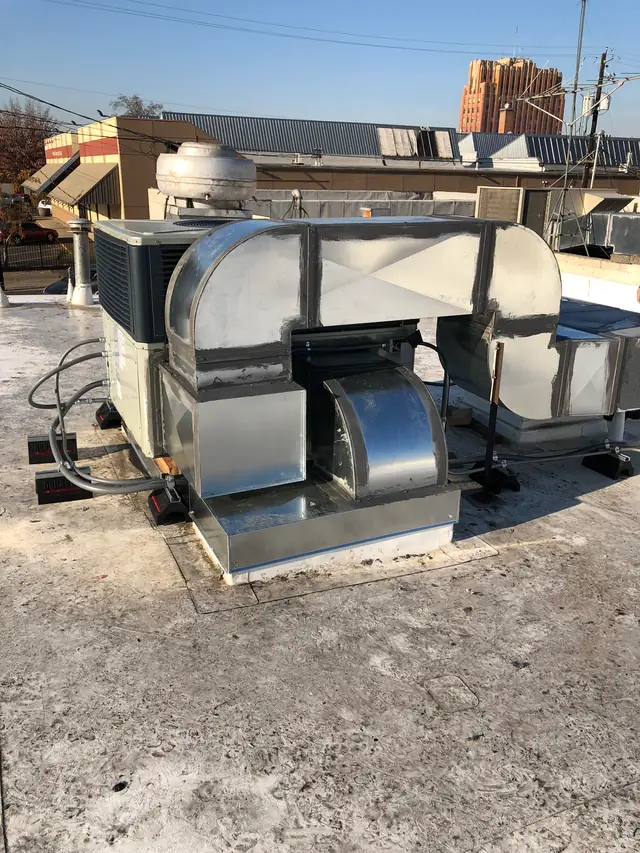
If you own or manage a business in Yakima, there's a good chance your heating and cooling comes from a unit on the roof. Packaged rooftop units are the workhorses of small and mid-size commercial buildings: restaurants, offices, retail shops, clinics. They work quietly until they don't, and then the failure usually arrives on the hottest afternoon of July or the coldest morning in January, with customers or staff in the building. Here's what these units do, what a good maintenance visit covers, and why regular care tends to cost less than the alternative.
What a packaged rooftop unit does
A packaged rooftop unit, often called an RTU, puts everything in one cabinet: the compressor, the condenser coil, the evaporator coil, the supply fan, the heat source (usually gas burners and a heat exchanger, though some are heat pumps) and the controls. Conditioned air goes down through ductwork into the space, and return air comes back up. Because the unit sits outside, it's exposed to sun, wind, snow and dust, and the Yakima Valley's swing from hot, dry summers to hard winters works every part of it. Putting the equipment on the roof also frees interior floor space and keeps the noise away from staff and customers.
What a maintenance visit covers
Maintenance isn't a quick look and a signature. Here are the items a thorough visit works through on a rooftop unit:
- Filters: checked and replaced on schedule. A loaded filter starves the unit of air and is one of the most common causes of avoidable breakdowns.
- Belts and pulleys: inspected for wear, cracking and correct tension. A loose or glazed belt slips and wears out the motor and blower.
- Coils: evaporator and condenser coils cleaned of dust, cottonwood fluff and grease, since dirty coils raise energy use and operating temperatures.
- Condensate drain: cleared so water leaves the unit and doesn't back up into the pan or the ceiling below.
- Economizer: dampers, actuator and sensors tested, because a stuck damper wastes energy or lets in too much outdoor air.
- Burner and heat exchanger: burners inspected, ignition and flame sensing tested, and the heat exchanger examined for cracks or corrosion.
- Electrical: contactors, capacitors, wiring connections and motor amperage checked against the nameplate ratings.
- Controls and thermostat: schedules, setpoints and safeties confirmed.
The point of the visit isn't only to clean things. It's to catch small problems while they're small. A cracked belt, a capacitor testing weak, a blower motor drawing more current than it should: each of these is cheap to fix on a scheduled visit and expensive on an emergency call.
Why agreements reduce repair calls
Our commercial page puts it this way: "To keep your systems humming happily, we offer commercial HVAC maintenance agreements." Environmental systems are like any other system. They need regular care to work well and to last, and an agreement is how that care actually happens.
An agreement puts the visits on a calendar, so the work gets done whether or not anyone remembers. It means the same company knows your equipment: where each unit sits, how it's been behaving, what was replaced last spring. And it shifts failures from emergencies to appointments. Instead of closing early because the rooftop stopped, you hear about a worn belt in April and it's handled before the heat arrives. Terms depend on the equipment, the building and how it's used, so ask us what an agreement would look like for yours.
What to ask any contractor about an agreement
- Which units are covered, and how many visits are scheduled each year?
- What exactly is done on each visit, and do I get a written report afterward?
- If a part fails, what is included: parts, labor, both or neither?
- How are urgent calls handled, and who do I phone?
- How does renewal work, and what happens if I want to change or cancel it?
Know your roof
If you can, walk the roof once with the technician, or ask for photos. Record the make, model and serial number of each unit, note its age, and keep that information in a file. If a unit is getting old, you can plan its replacement in a budget cycle instead of reacting to a failure. Ask about roof access and safety too, and have someone look at the areas around each unit curb for signs of moisture, since a leak that starts at a unit is a problem for the building, not only for the equipment.
We handle new system installation, maintenance and repair for commercial buildings, and no job is too big or too small for our team. Call (509) 966-8731 or contact Ice & Fire Mechanical in Yakima for a free consultation about your rooftop equipment.
Ice & Fire Mechanical, (509) 966-8731
Call (509) 966-8731More articles
Signs Your Heat Pump Needs Replacing (and When a Repair Is Enough)
Most heat pumps give you warning before they quit, and knowing which warnings matter can save you a cold night and a larger bill.
How to Get Ready for a Heating Service Visit
A little preparation before the truck arrives means a faster visit and fewer surprises.